The Flower of the Sun
The common sunflower (Helianthus annuus) was domesticated by Indigenous peoples of North America several thousand years ago for its edible seeds and oil-bearing capacity. Archaeological finds from sites in present-day Mexico and the southwestern United States, including preserved seeds and pollen, indicate cultivation by at least 3000 BCE. Among Indigenous cultures of the Plains, Southwest, and Eastern Woodlands, sunflowers were grown as staple crops because they produced dependable yields in open, sun-exposed environments. The seeds were eaten raw, roasted, or ground into meal, and oil pressed from the seeds was used in food preparation.
The large circular flower head, with its radiating structure, visually resembled the sun, which accounts for its association with seasonal cycles and agricultural timekeeping. This resemblance explains the sunflower’s presence in ritual contexts connected to planting, harvest, and renewal. Yellow to orange pigments were produced from the flower petals and seed hulls and used as dyes for textiles, basketry, and body decoration. These dyes were practical because the plant parts were abundant and could be processed by boiling or soaking without complex tools. Sunflower imagery appears on pottery, textiles, and ceremonial objects as a result of the plant’s combined importance as a food source and a visible marker of seasonal order.
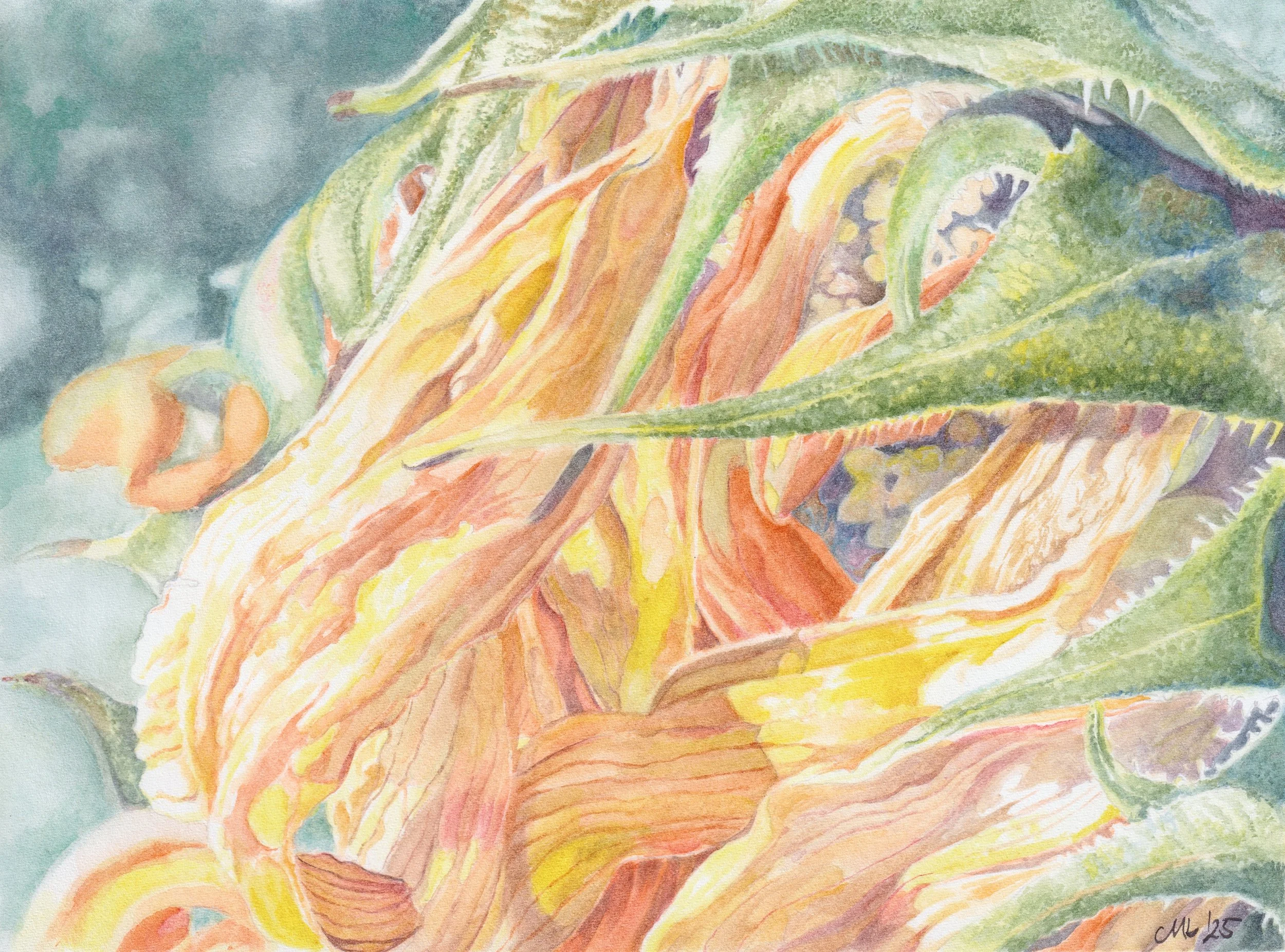
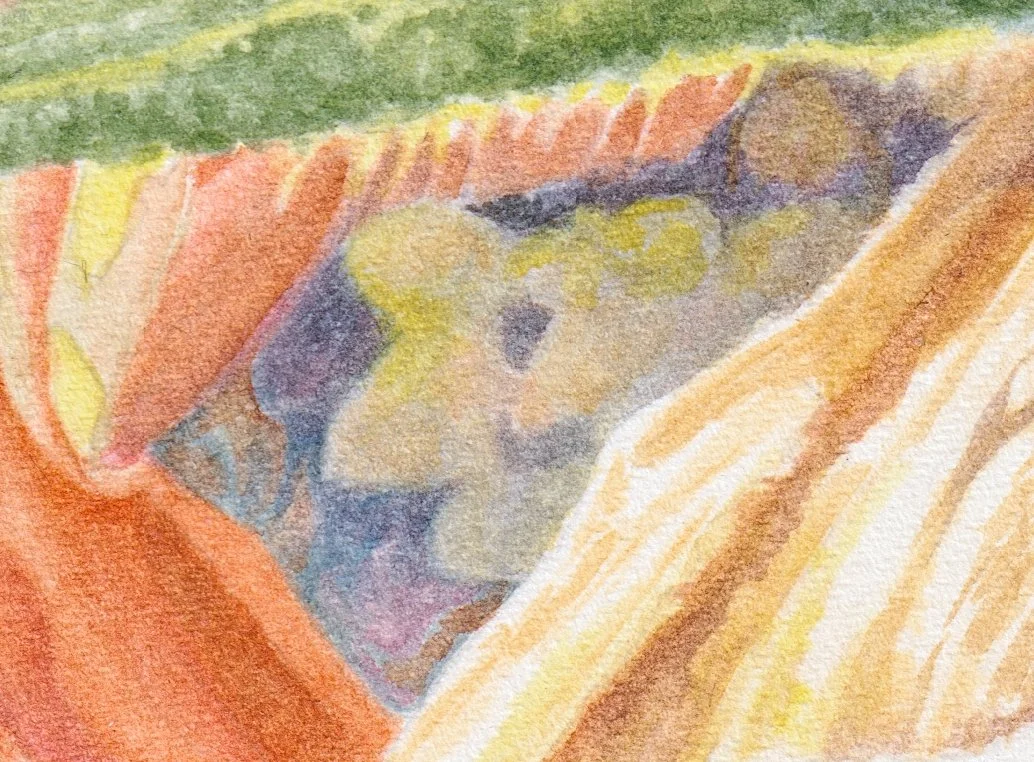
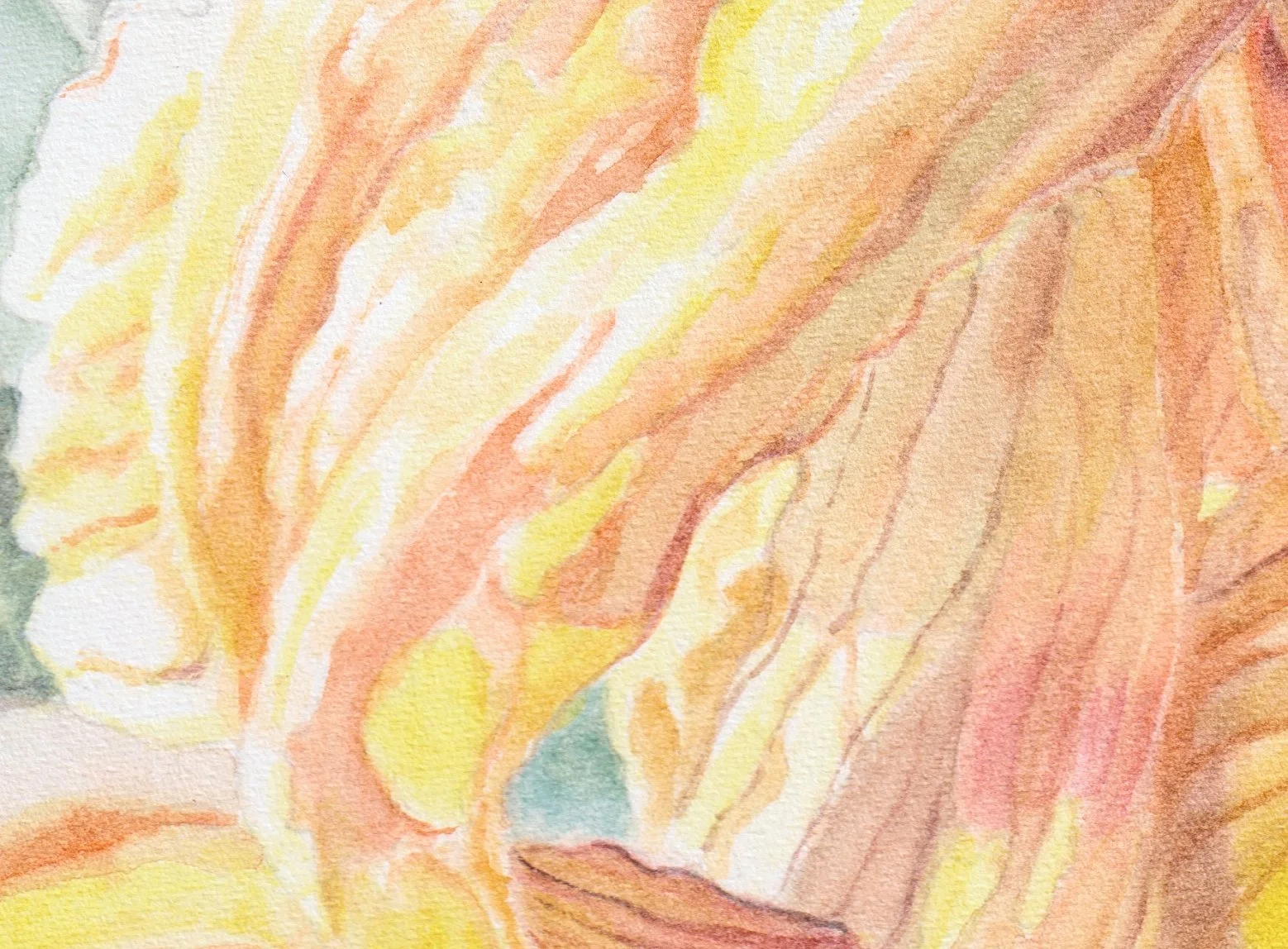
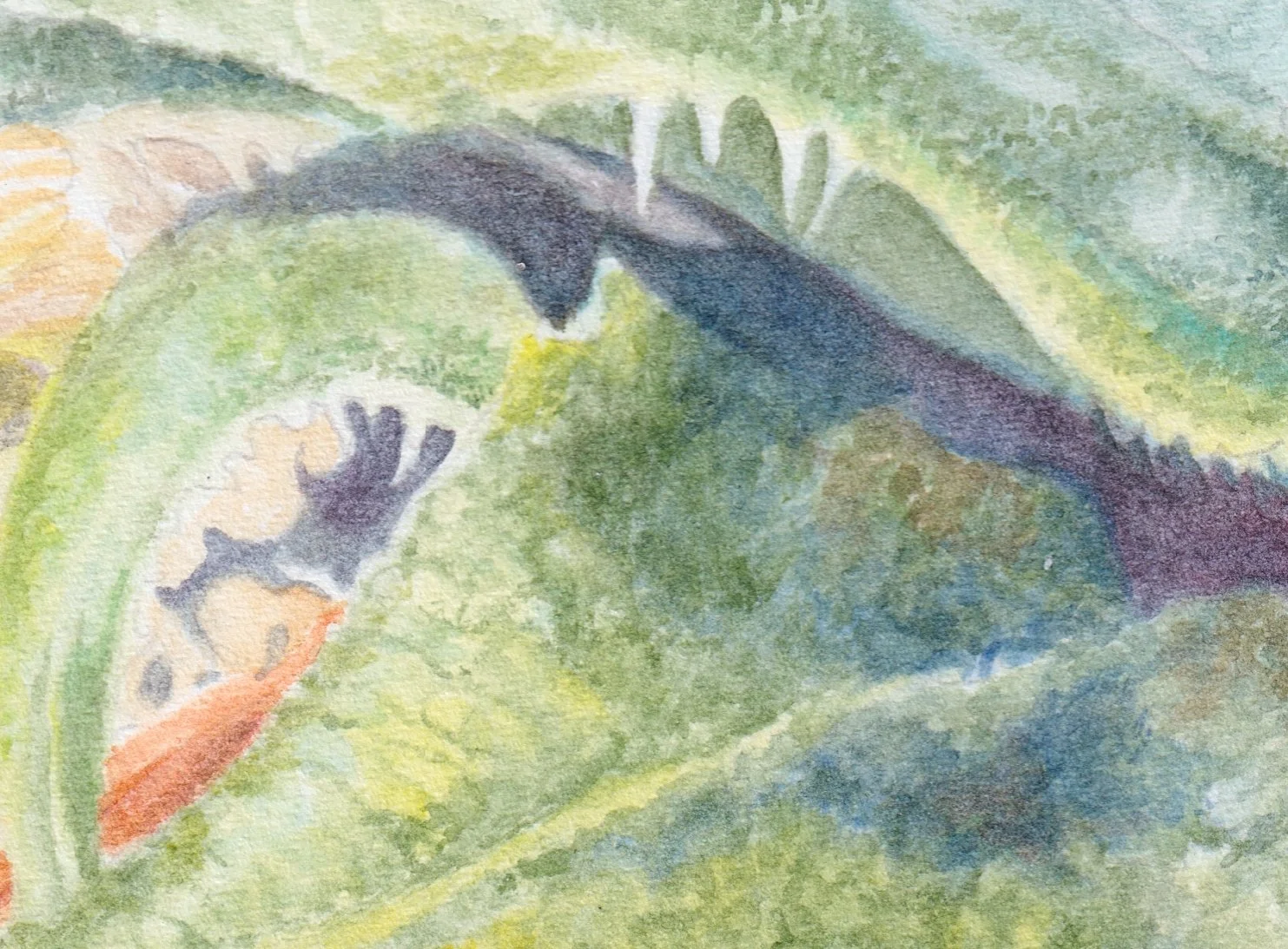
Watercolor on paper, 2025
21x15 cm