Formal Visit
Peach and pale roses originate from cultivated varieties of Rosa species developed through selective breeding in Europe and the Near East from late medieval periods onward. Naturally occurring wild roses were most commonly red, pink, or white, while softer tones such as peach emerged gradually through horticultural selection. In Roman and medieval Europe, lighter-colored roses were used in civic and courtly contexts where restraint and propriety were required. Such flowers appeared in ceremonial gardens, religious settings, and diplomatic exchanges, where stronger colors were considered inappropriate. The use of pale roses in these contexts emphasized moderation in gesture and formality of conduct.
In medieval monasteries, roses of lighter coloration were cultivated primarily for their scent and medicinal value. Rose petals, regardless of hue, were used in preparations for cooling inflammations, soothing the skin, and easing irritation of the eyes and throat. Rose water, distilled from petals, was employed in both medical and culinary practices across Europe and the Islamic world. Pale roses were also grown in enclosed gardens and cloisters.
In later European social customs, pale and peach-toned roses became associated with courteous exchange and acknowledgment rather than declaration. By the eighteenth and nineteenth centuries, such roses were commonly used in formal visits, public commemorations, and controlled expressions of regard. Their continued use in these settings reflects a long-standing association with moderation, social balance, and measured presentation.
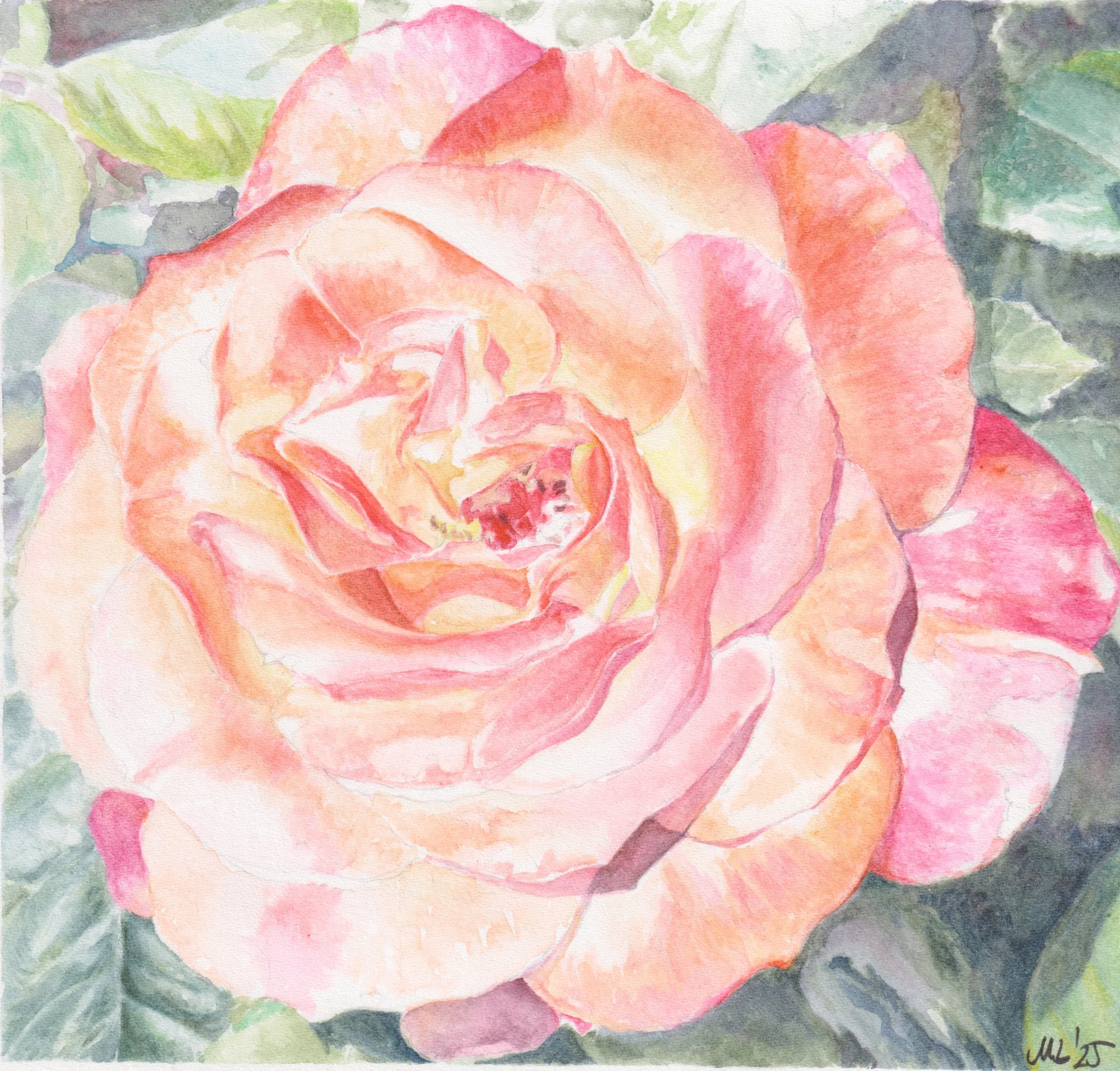
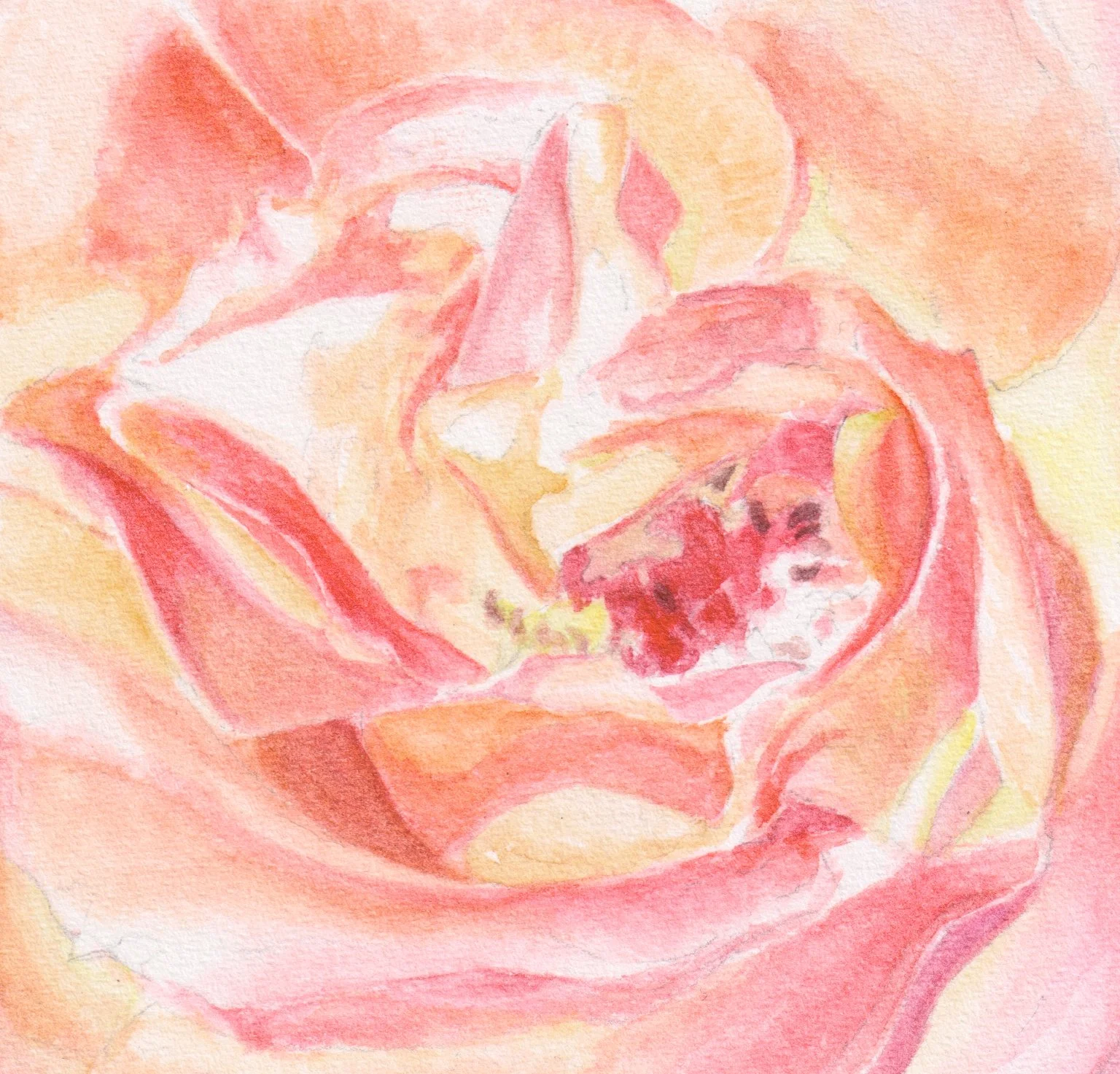
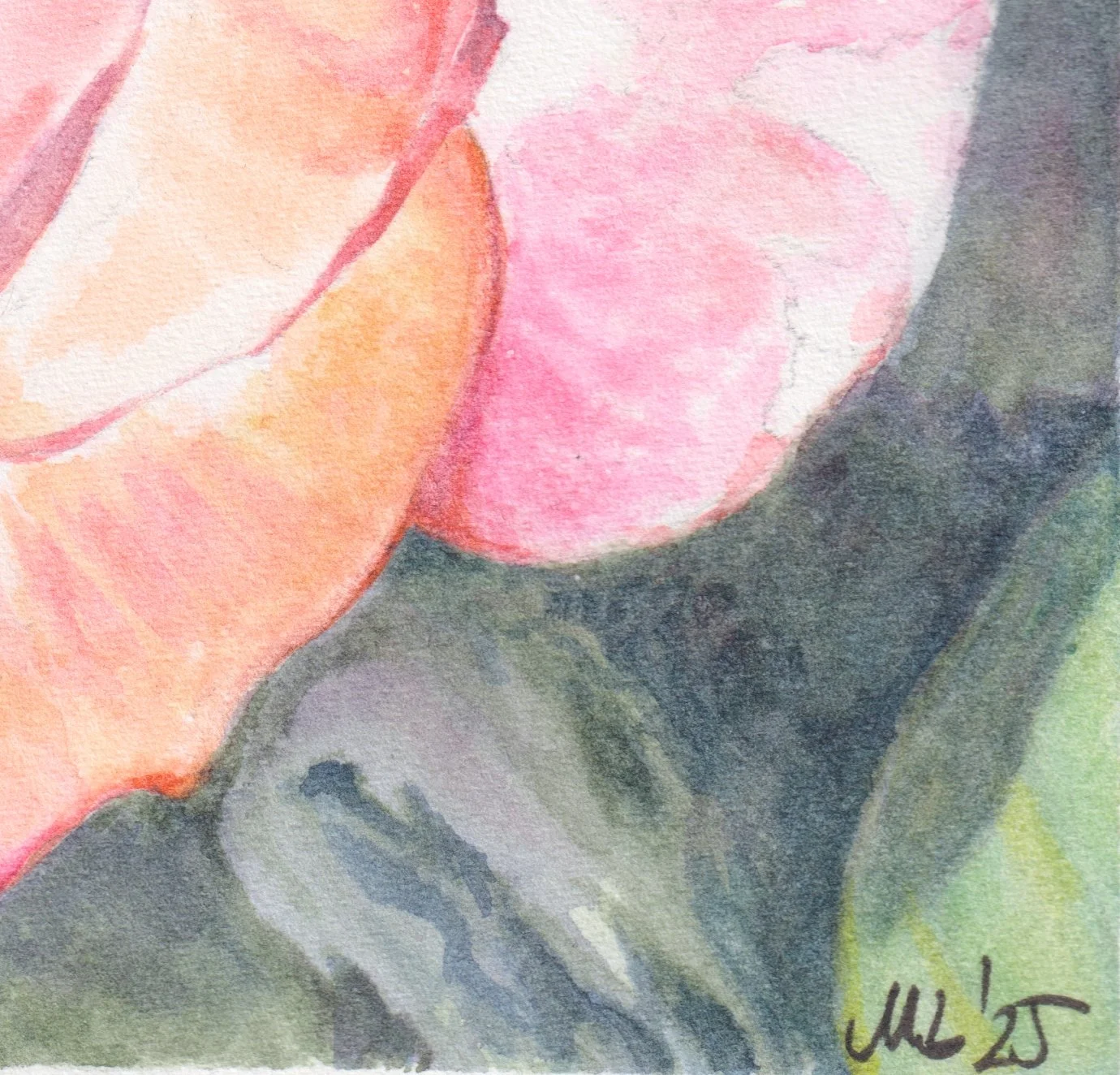
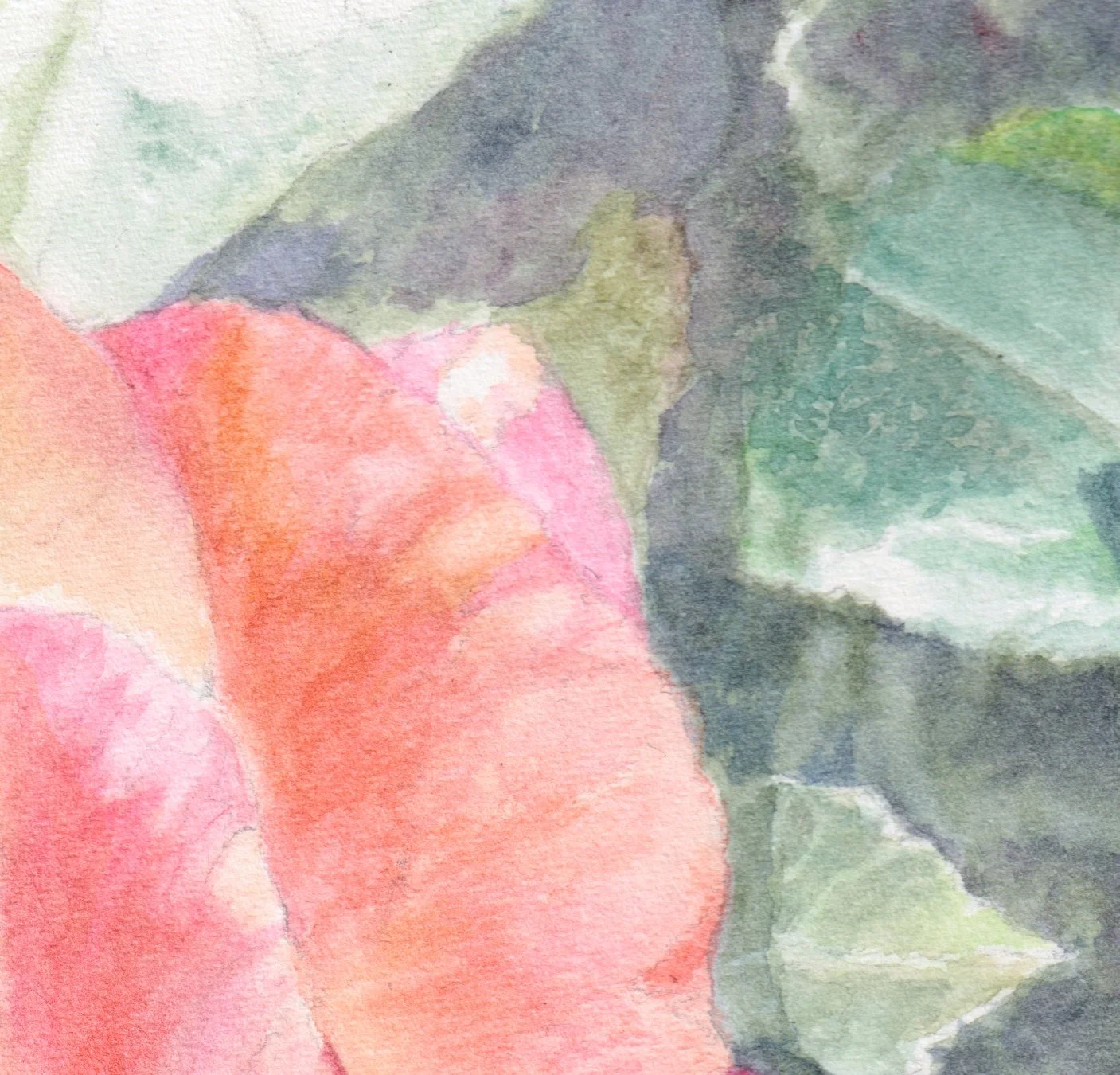
Watercolor on paper, 2025
16x15 cm