The Monastery Ward
Tree-mallow (Lavatera) belongs to the broader mallow group recorded in Mediterranean and southern European plant use from classical antiquity onward. Ancient Greek medical writers, including Hippocrates, listed mallows among plants used to relieve internal heat and soften inflamed tissue, particularly in digestive and respiratory complaints. Roman authors such as Pliny the Elder described mallow as suitable for regular use, noting its presence in cultivated gardens. In the Roman period and later in early medieval Europe, Lavatera species were commonly grown near dwellings, cloisters, and monastery infirmary gardens, where access for repeated harvesting was required. Medieval herbals from Italy, southern France, and Central Europe record the use of mallow leaves and roots in poultices applied to swelling, joint stiffness, and skin irritation. Written sources also describe decoctions prepared for throat inflammation and prolonged cough, conditions understood as requiring sustained intervention. Tree-mallow’s perennial growth habit made it reliable for domestic gardens, where plants were expected to persist across seasons without special care. In monastic contexts, it appears among plants intended for everyday treatment. Its continued cultivation across centuries reflects practical dependence. The cultural understanding of tree-mallow developed through repeated household application in medical and caregiving settings.
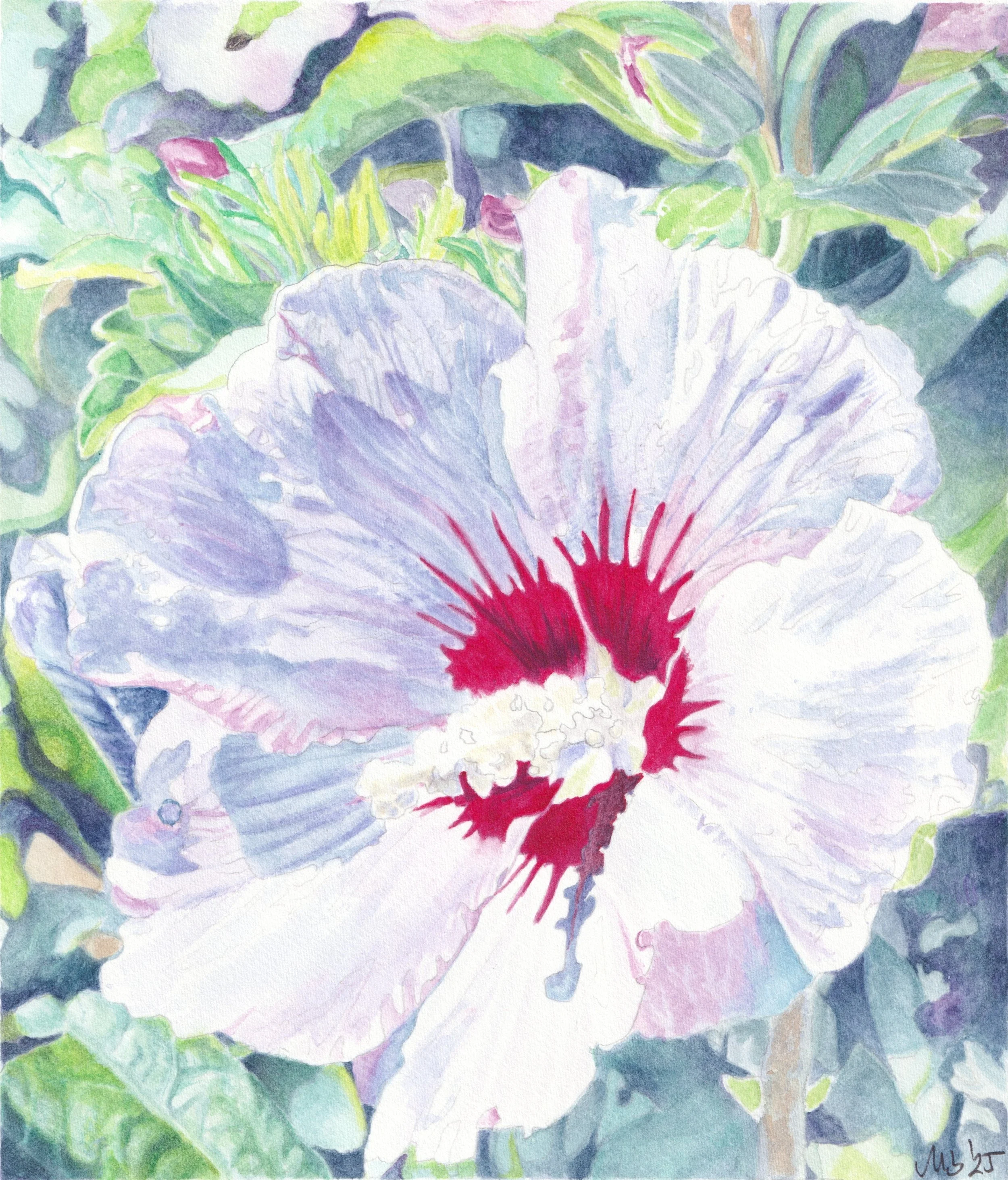
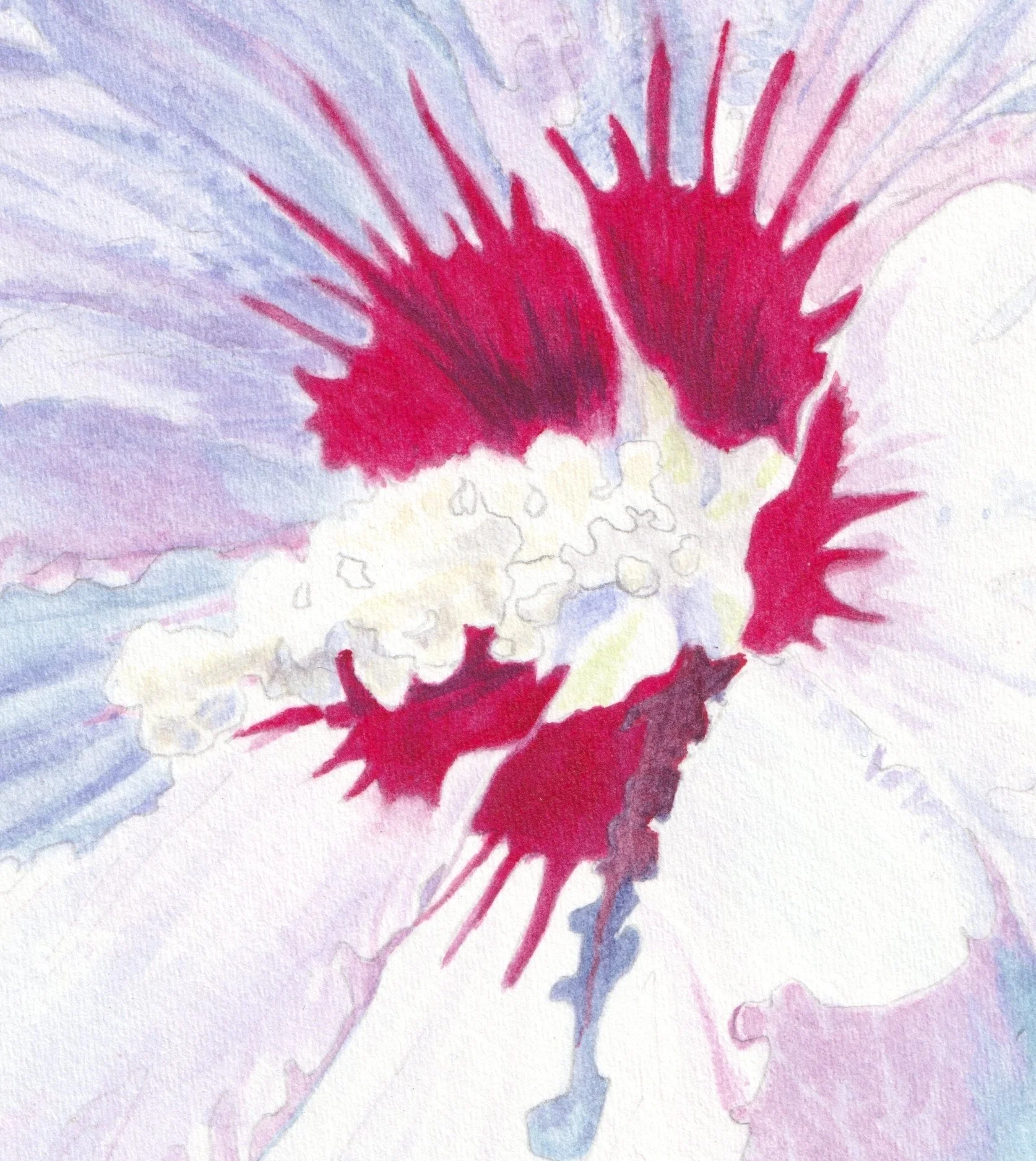
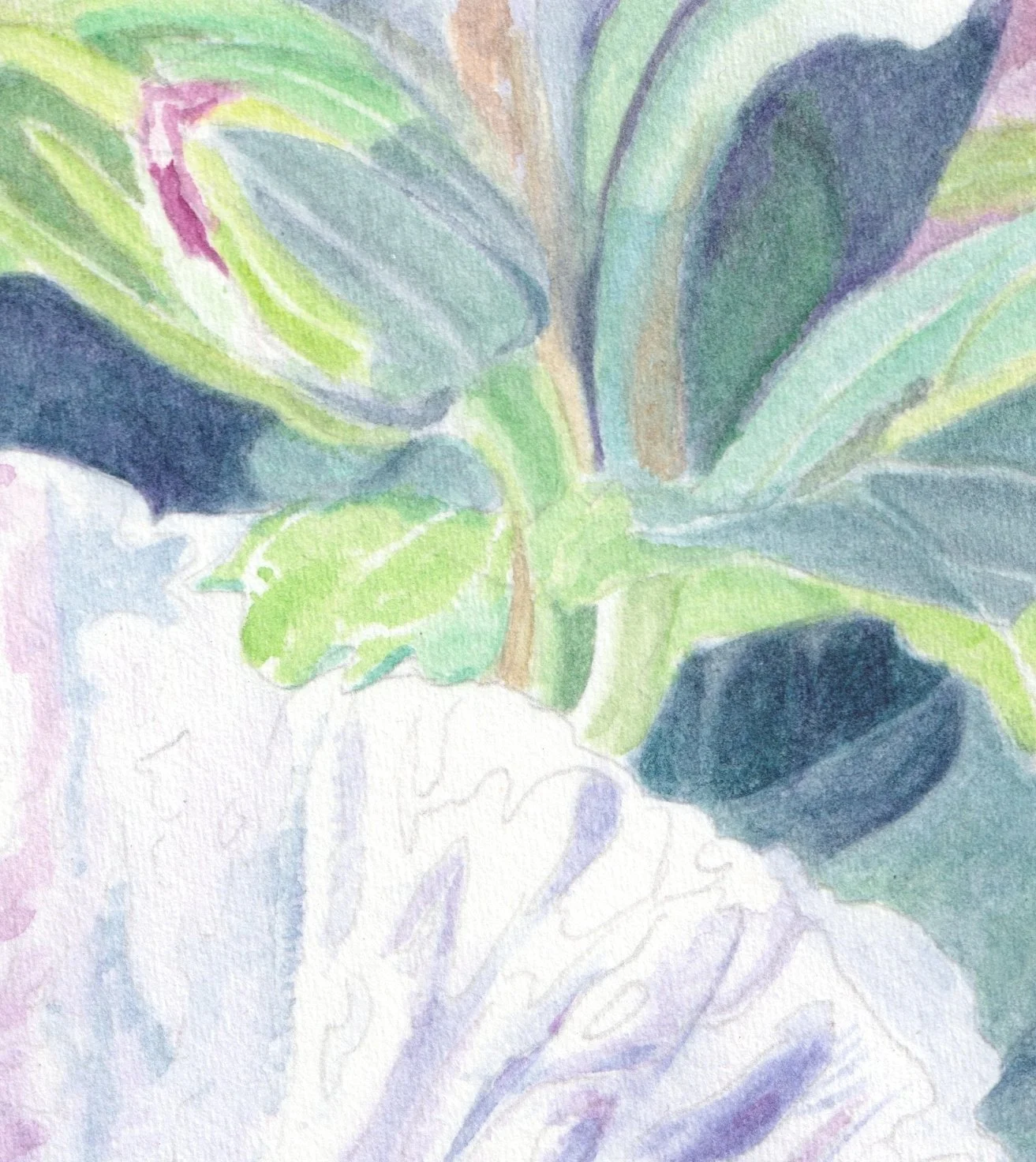

Watercolor on paper, 2025
15x18 cm