Hag’s Candle
Verbascum species have long been associated with fire and portable light in European rural practice. Early modern herbals describe dried mullein stalks dipped in fat or tallow and burned as hand-held torches. This practice is recorded in John Gerard’s Herball (1597), which lists mullein among plants used in everyday domestic contexts. English folklore collections compiled by Margaret Baker and Roy Vickery record the name hag’s candle for these torches. The term appears in connection with solitary night movement, watch duties, and outdoor labour. Mullein torches are documented as being carried along paths, field margins, and working ground after dark. Herbals and rural manuals also note the burning of mullein leaves and stalks to produce smoke indoors. This smoke is recorded as being used during warm seasons when insects were active. Dried mullein material is further described as being placed near sleeping areas, doorways, and stored goods. These uses appear consistently across household and rural records from multiple European regions.
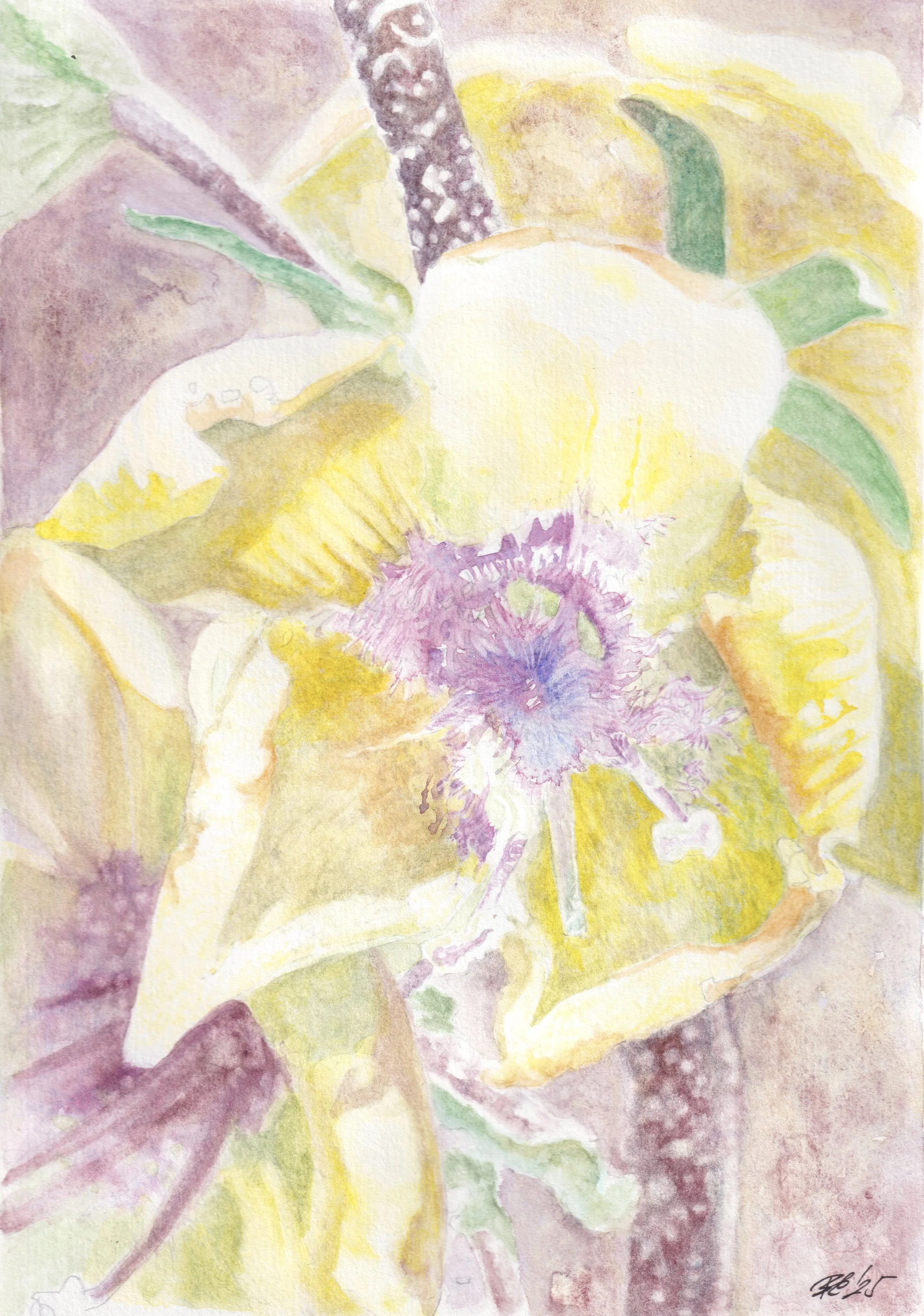
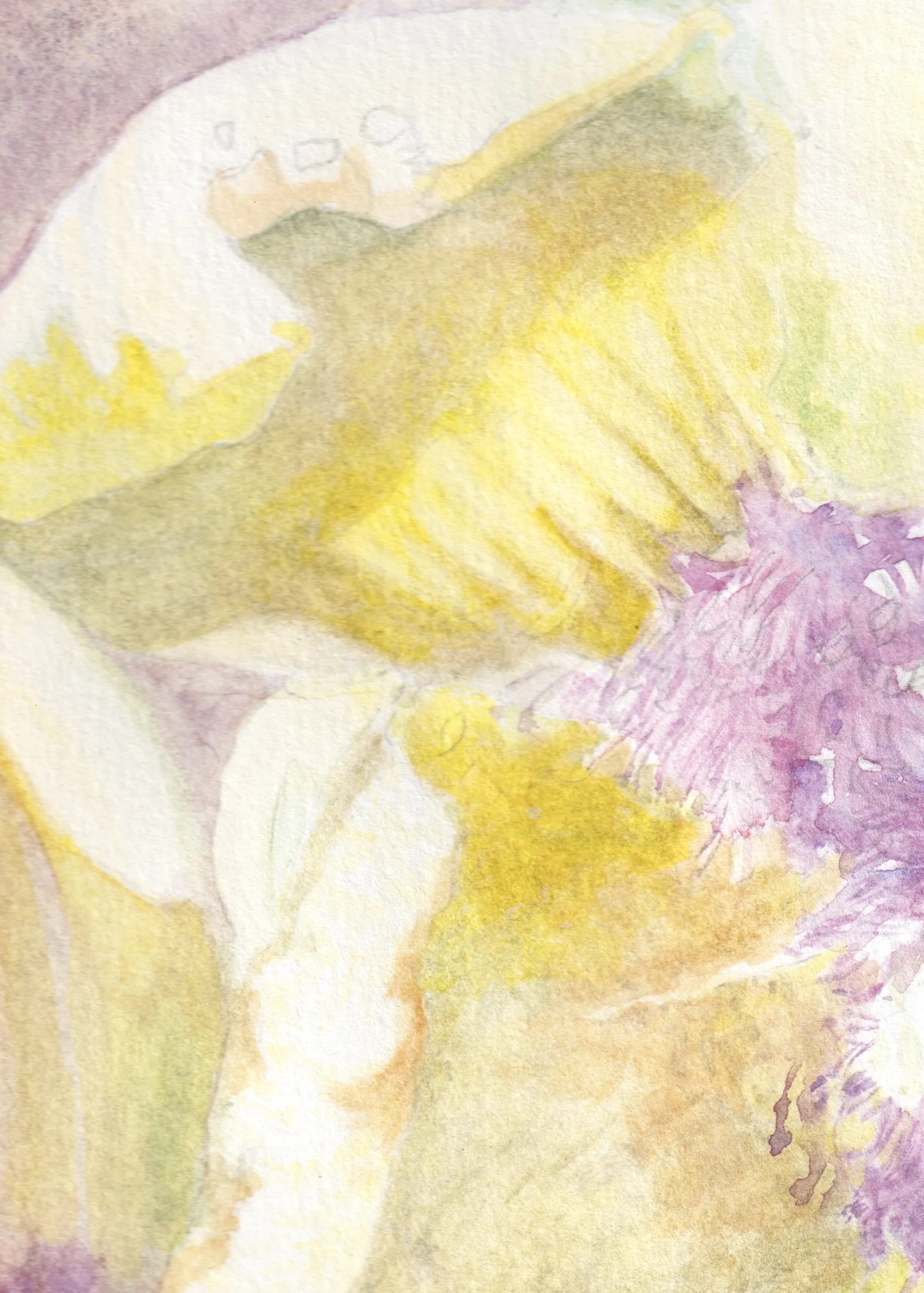
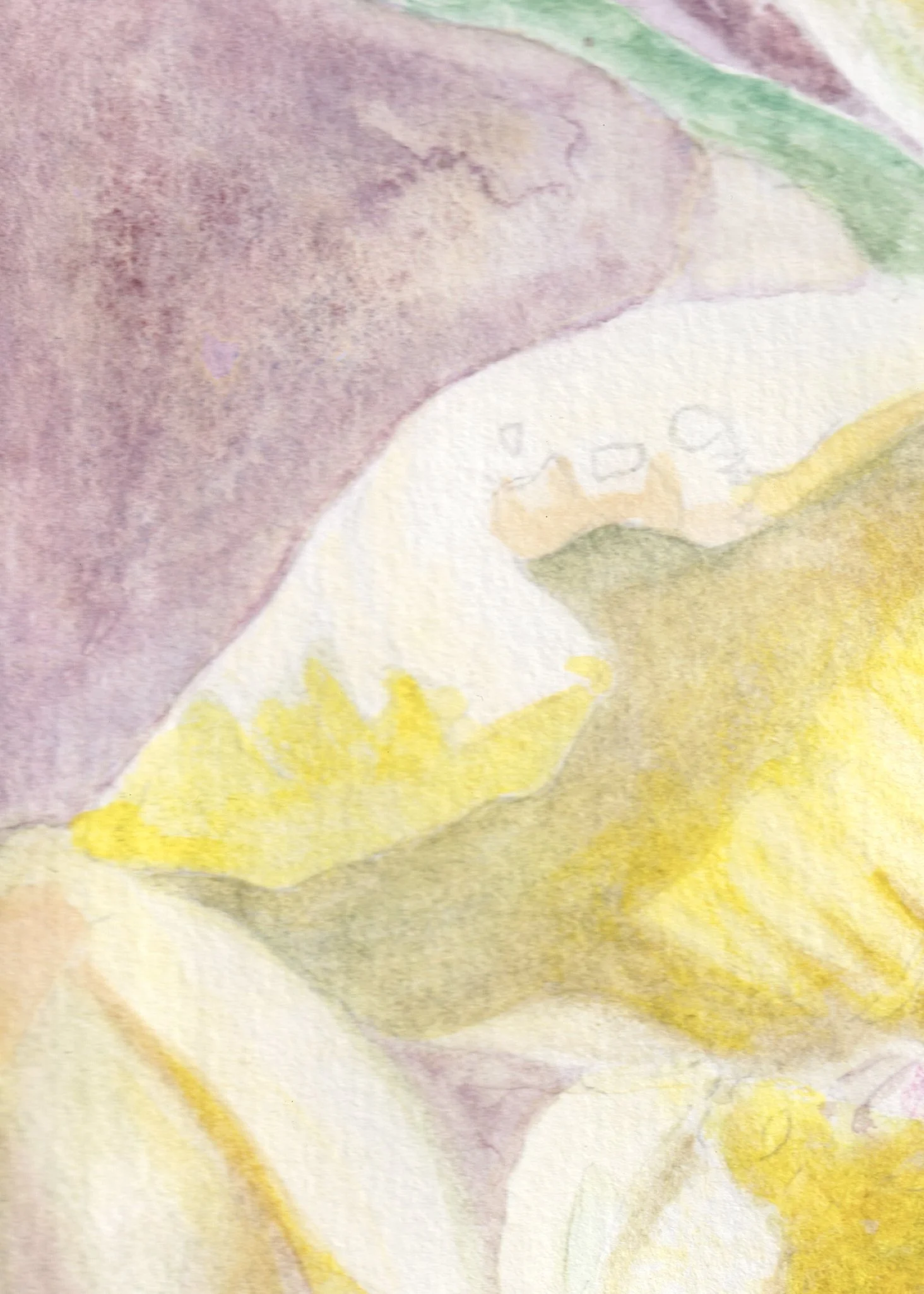
Watercolor on paper, 2025
17x24 cm