Refinement
Lilies were cultivated in East Asia as ornamental plants and, in some contexts, as useful plants, grown in household gardens as well as managed plots. Garden manuals describe lilies as hardy perennials that were often left undisturbed for successive seasons. The plants required careful placement and suitable soil conditions but were not considered fragile. Beyond their flowers, the bulbs were valued in household and medical records as a stored food, especially during colder months. In domestic settings, lily bulbs were cooked with grains or vegetables and appear in culinary and medicinal sources. This placed lilies among plants that served both ornamental and practical roles. In Chinese culture, lilies became associated with marriage through linguistic wordplay rather than narrative legend. The word for lily, bǎihé, shares its pronunciation with the phrase meaning “harmonious union for a hundred years,” a traditional wedding blessing. Because of this phonetic association, lilies were commonly used in wedding gifts, embroidery, and household decoration connected to marriage. In Japan, lilies were appreciated primarily for their form and posture and appeared frequently in painting, textiles, and decorative arts.
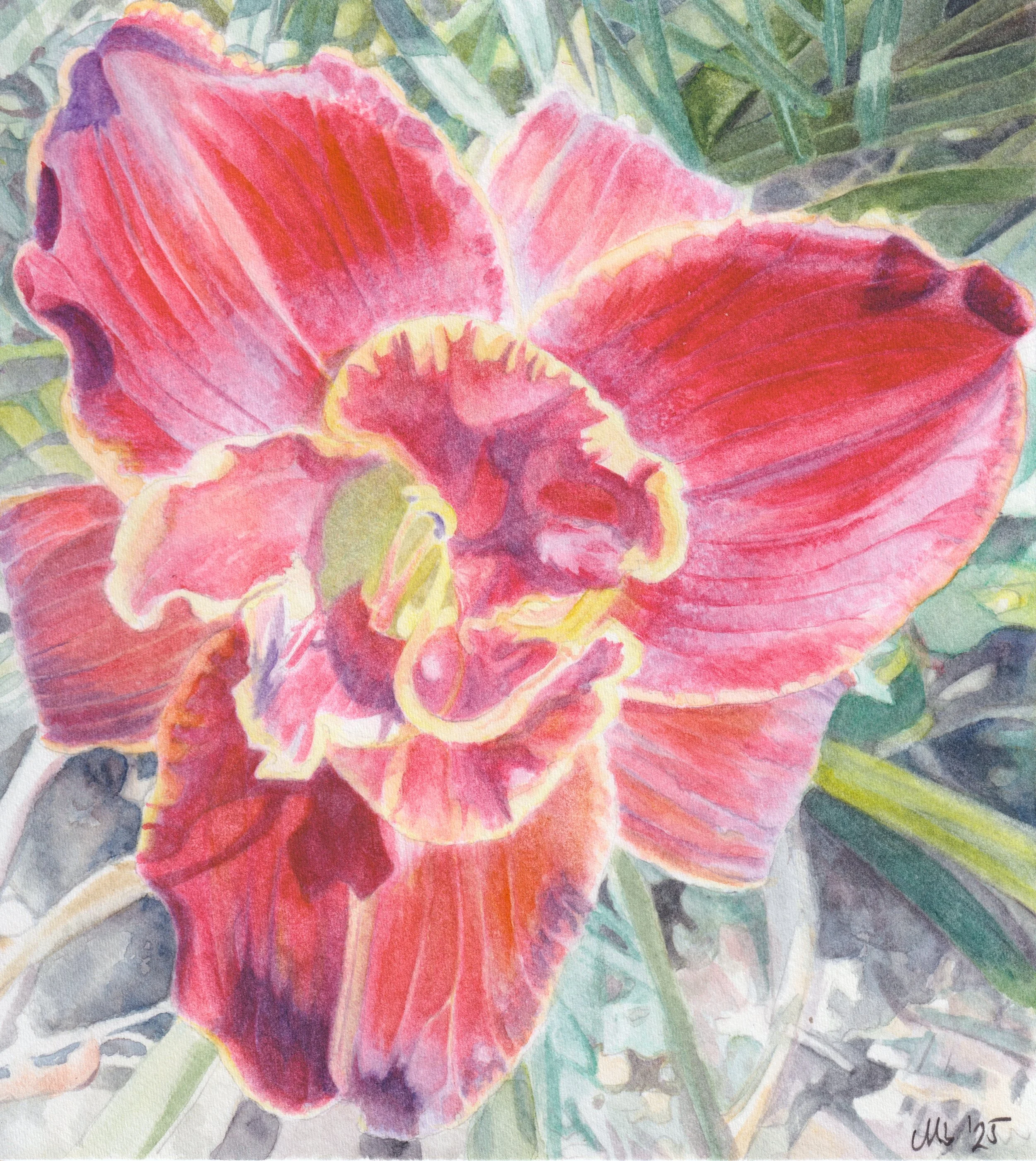
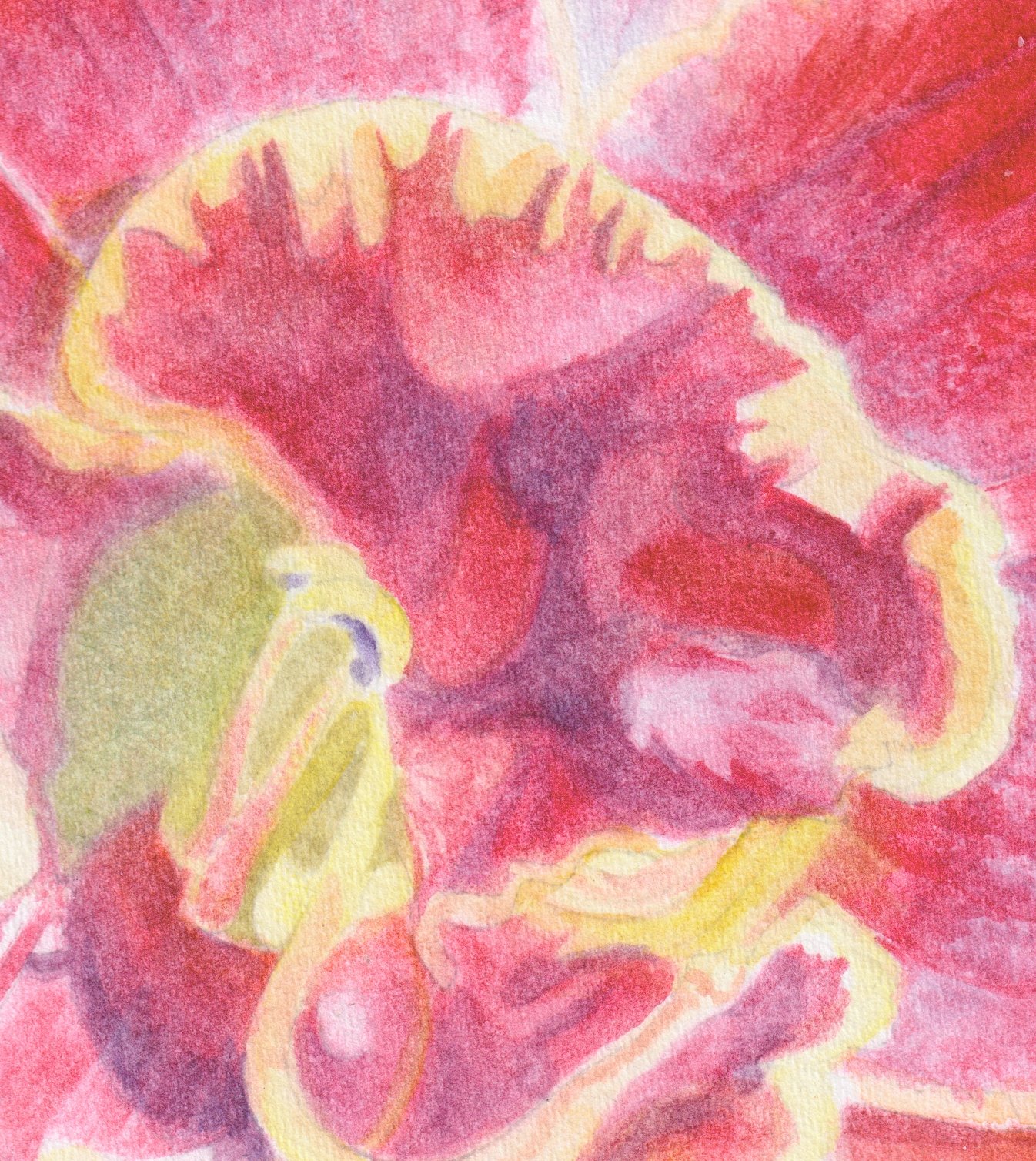
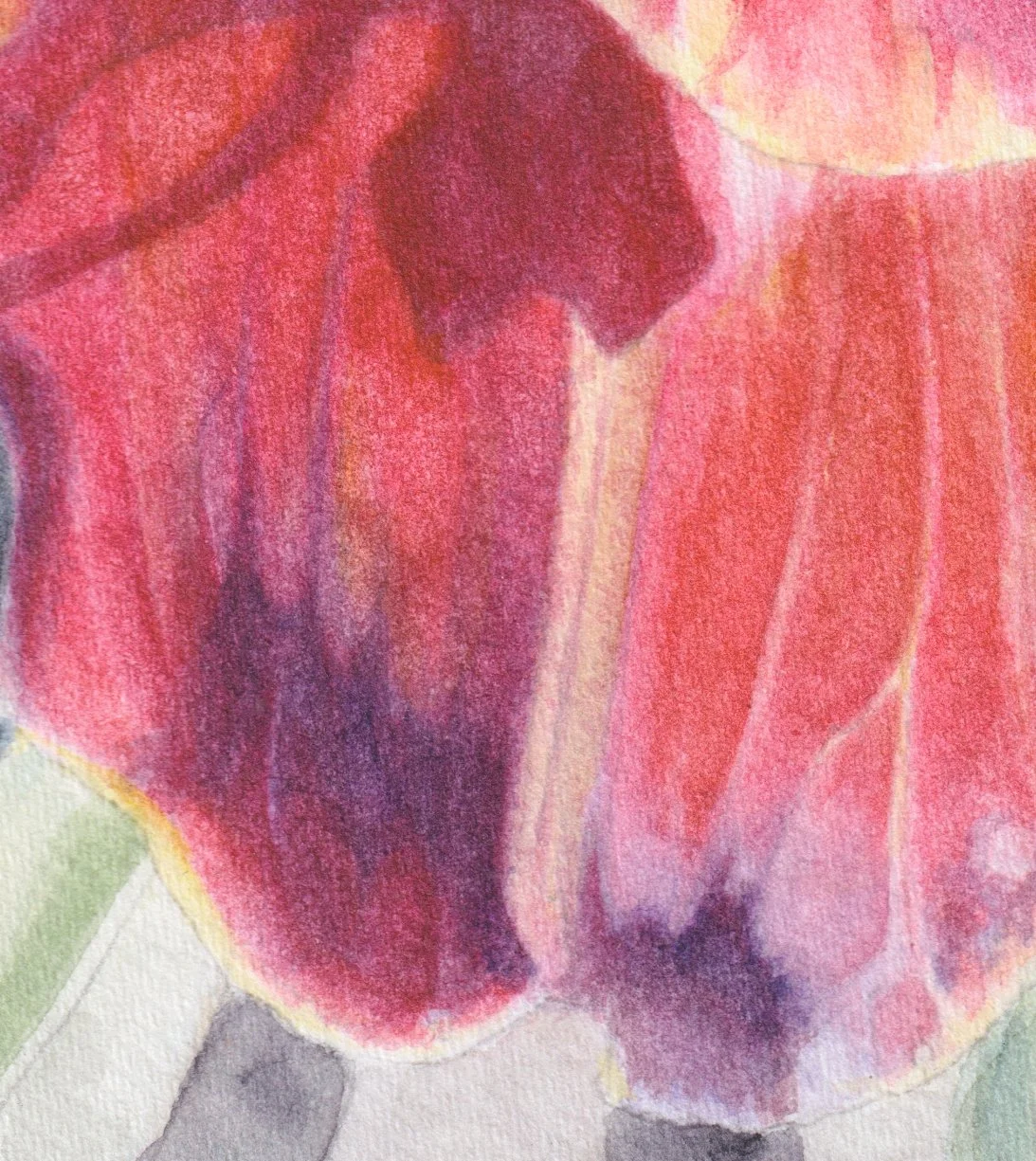
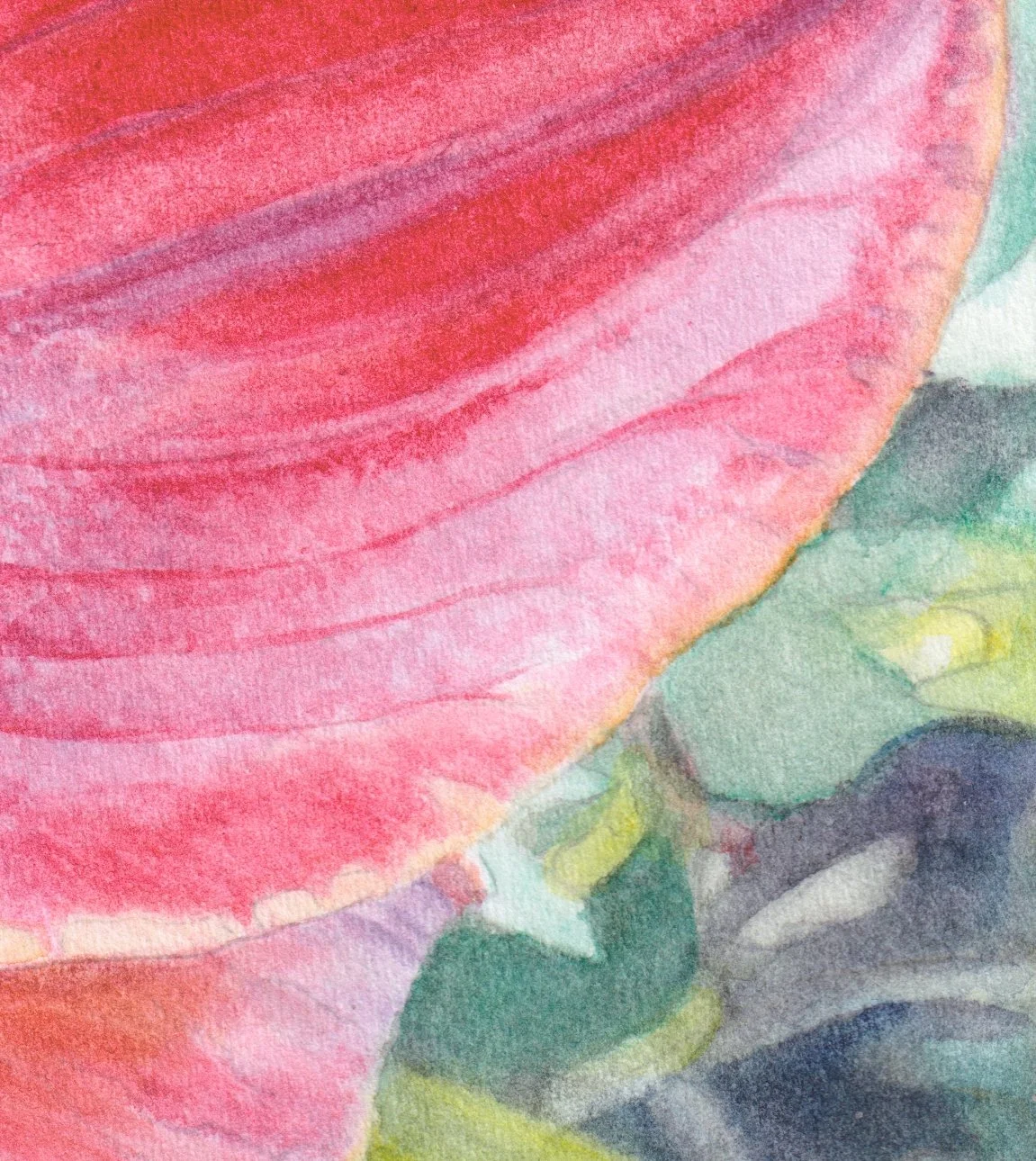
Watercolor on paper, 2025
15x17 cm